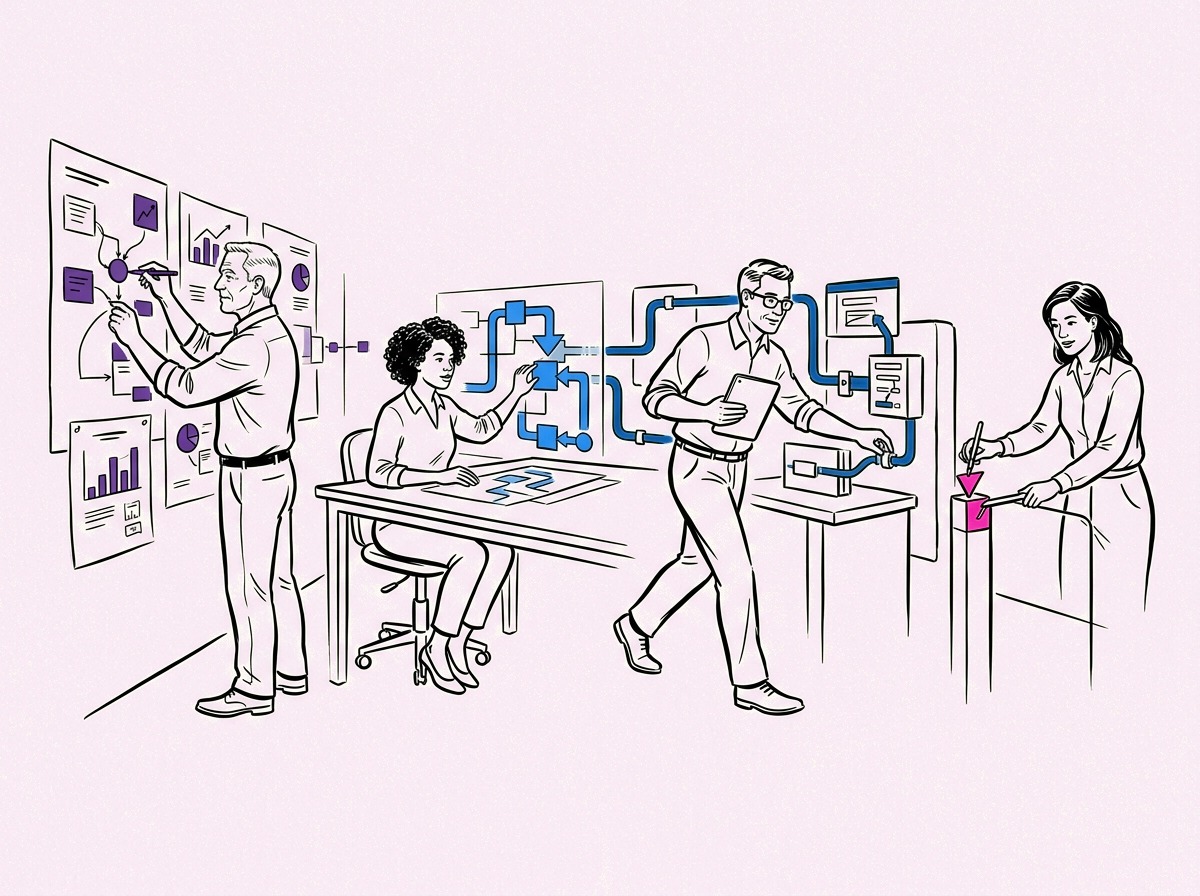
The Business Professional's AI Manifesto

A Manifesto for knowledge workers, managers, and leaders.

The Business Professional's AI Manifesto

The standard for professional value already changed. Nobody announced it. This is how you meet it without giving up the judgment that made you valuable in the first place.

BFBruce Fleck, PhDAI Educator and Strategist
Start reading
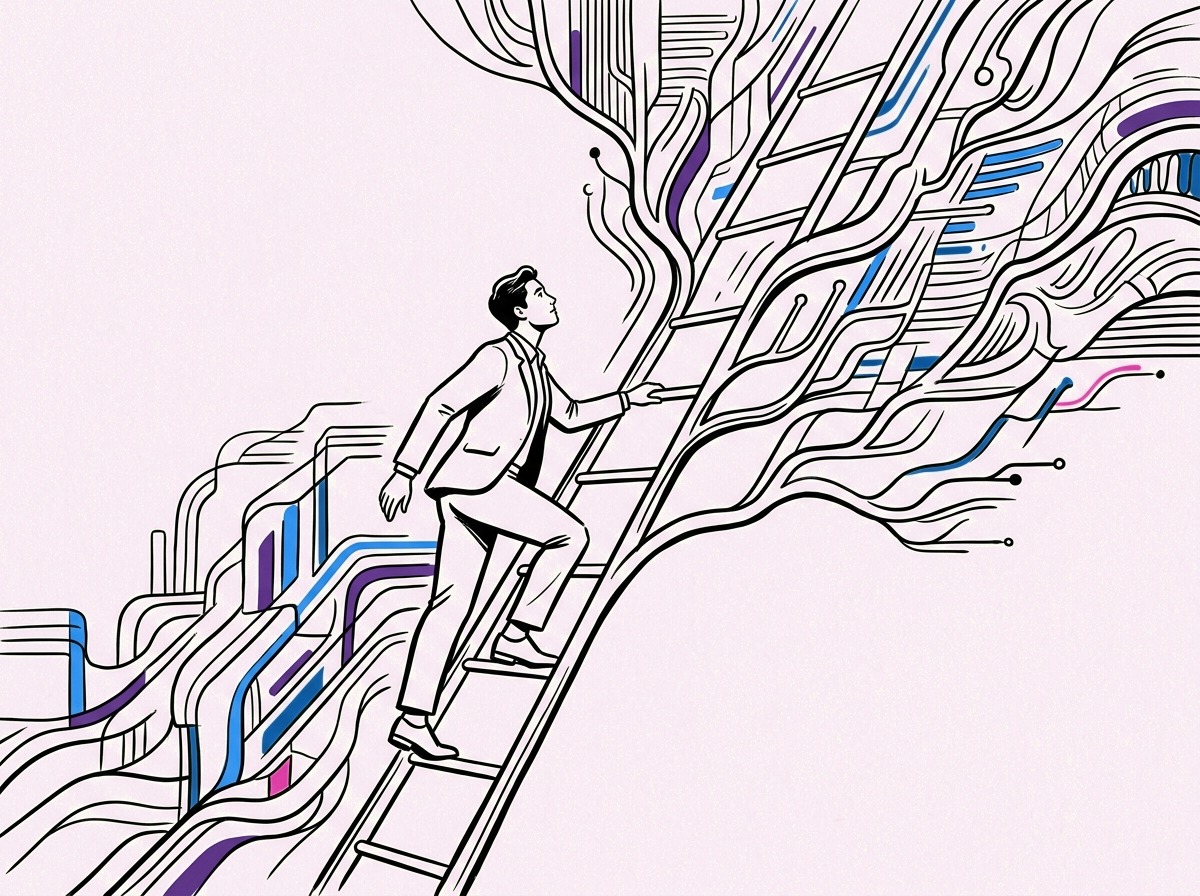
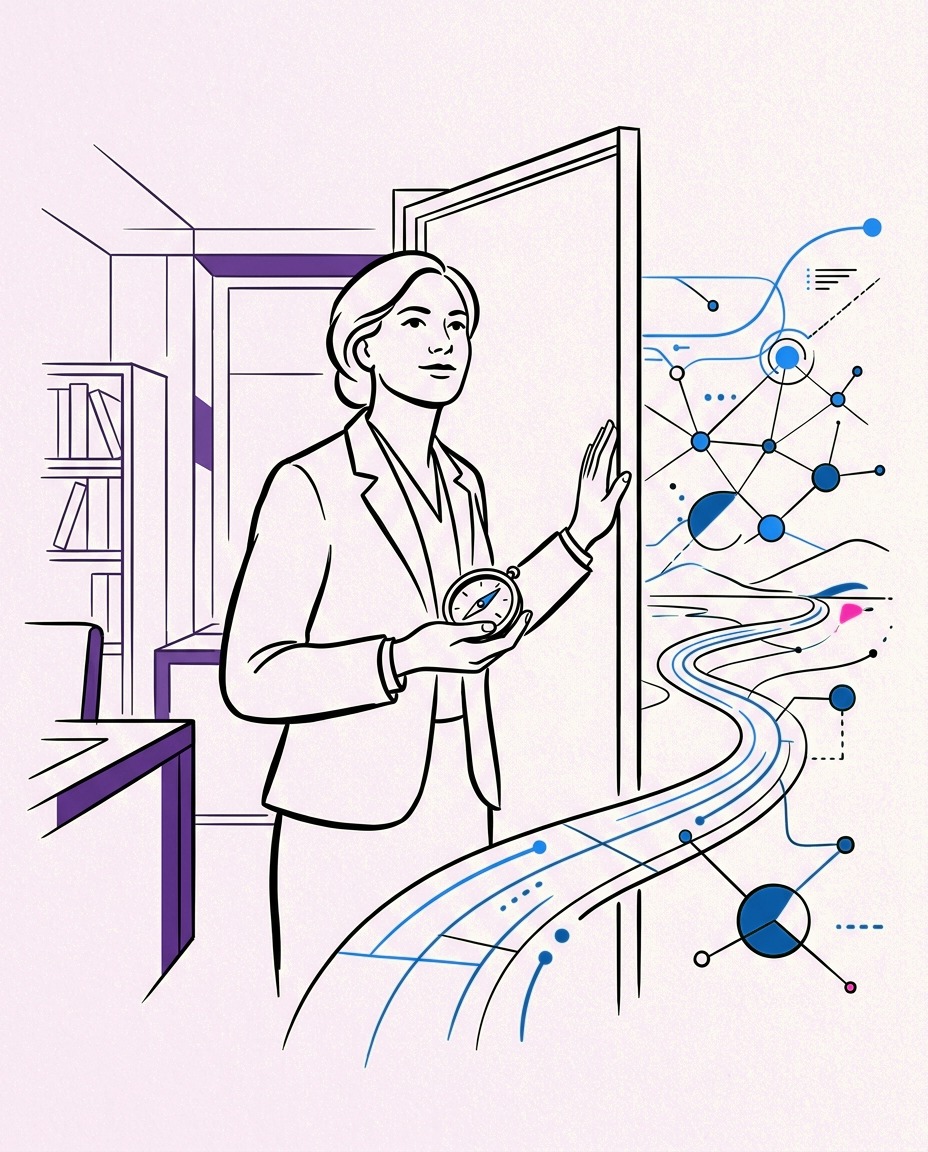
A professional stepping from a traditional office path onto a new path shaped by human judgment and artificial intelligence

Opening

Something already changed.

Something changed inside your organization and nobody announced it. There was no companywide meeting. No revised job description arrived. No leader stood at the front of the room and explained that the standard for professional work had moved.

It moved anyway.

The people who noticed did not receive a memo. They saw colleagues produce in an afternoon what used to take a week. They watched routine research, reporting, writing, and coordination compress into a fraction of the time. They learned that the first draft was no longer the work. Choosing the right work, defining what good looked like, and judging what came back became the work.

The people who did not notice kept meeting the old standard. They worked hard. They stayed competent. They remained responsible. None of those qualities became less valuable. The agreement around them changed before the words used to describe it did.

That is what makes this moment difficult. The danger is not a machine arriving one day to take a whole job. The danger is a job expanding in pieces while the person holding it receives no instruction about the expansion. The standard moves quietly. The professional discovers it only after being measured against it.

Waiting feels reasonable under those conditions. A responsible employee waits for an approved tool, an official policy, and training tied to the work. Yet adoption did not arrive that way. It came through individuals who began using what was available, often before the organization had decided what to call it.

Waiting is not neutral. Waiting is the only choice with no upside.

I am not God, but I recognize the shape of a warning. The threat is real. Shelter can be built. The institution may never deliver the warning in the form you expected because the institution is learning at the same time you are.

There is another side to this change. The same shift that threatens a professional who waits can elevate a professional who moves. When routine coordination shrinks, judgment becomes more concentrated. When production accelerates, choosing what deserves to be produced becomes more valuable. When a machine can create ten plausible answers, the person who can recognize the right one matters more.

Responsibility that once sat two levels above you is moving closer. Vision. Direction. Allocation. Standards. Accountability. It arrived without the title and without the announcement.

This is not a demotion. It is a promotion nobody explained.

The complete argument

Four premises. Thirteen planks. One professional identity.

The opening names the change. The premises explain why learning matters, how adults build real expertise, what survives tool churn, and how AI becomes part of the work itself.

Premise 1

Learning AI is not optional. It's a mandate. Organizations expect it and training may never come.

  1. Employees without AI skills won't be needed. AI workers will.
  2. The work expanded. The job description did not.
  3. Do not wait for employer training. Start now.
Premise 2

Learning AI is not a course you take. It is expertise you never stop developing.

  1. Practice on small, real projects.
  2. Treat practice as play, not performance.
  3. Learn faster with peers than alone.
Premise 3

Tools are temporary. Capabilities last indefinitely.

  1. Build AI skills in stages.
  2. Learn principles over tools.
  3. Grow your thinking. Not just its application.
Premise 4

Using AI is not adding it to work. It is integrating it into work.

  1. Add AI to the workflow you already have.
  2. Redesign workflows around AI.
  3. Develop agent creation and coordination skills.
  4. Build safeguards as fast as capabilities.
Premise 1

Learning AI is not optional. It's a mandate. Organizations expect it and training may never come.

A professional climbing a ladder while the level of the work rises around them

Competence and tenure used to create protection because the ground beneath a job moved slowly. A person could master the systems, understand the unwritten rules, and build value through accumulated knowledge. Those things still matter. The speed of the ground changed.

The mandate comes from two forces no individual controls. The first is a capability gap between people who can use AI inside their work and people who cannot. The second is an unannounced expansion of the work itself. The response, however, is still within reach. Learn deliberately and begin before the institution finishes deciding what its program should be.

Employees without AI skills won't be needed. AI workers will.

AI arrived with product demonstrations, quick-start guides, and lists of features. It did not arrive with instruction in the craft of using it inside a specific profession. Organizations often provide access, general guidance, and rules about what cannot be shared. They rarely teach an analyst, program manager, clinician, engineer, or attorney how to redesign the work they actually own.

That distinction matters. An apprentice blacksmith does not become a smith because someone placed tongs and a hammer nearby. Access to the equipment was never the missing piece. Instruction in the craft was. The same is true here. Knowing where to type a request is not the same as knowing how to use AI to research a decision, challenge an assumption, create a reliable work product, or improve a process.

The training gap is measured. Section's AI Proficiency Report found that even in organizations deploying agents, only about one in three employees received agent-specific training. Senior leaders were far more likely to receive both access and support. The people closest to the daily work were often handed the tool and left to invent the craft themselves.

The labor market has begun to reflect that gap. Large studies of job postings and employment patterns show entry-level hiring contracting more quickly in occupations exposed to AI. That does not mean work disappeared. It means the work that once converted academic knowledge into professional judgment is changing. Employers can automate parts of the old apprenticeship while still expecting the judgment it used to produce.

This is not a reason to blame people who are not already fluent. The path is new, uneven, and poorly marked. Few organizations know how to teach domain-specific AI capability because few have built it deeply enough to understand what the curriculum would require. The absence of instruction is real. It cannot become a reason to stand still.

A professional who waits for perfectly matched training stays broad and shallow. A colleague who takes one part of the work and learns to do it with AI begins compounding. A year later the difference looks like talent. It was practice. Several years later the difference becomes expensive to close because the colleague is no longer learning a tool. They are building judgment about when and how to use it.

You were handed the tool. You were never taught the craft. The craft is yours to build.

The work expanded. The job description did not.

The job description at issue is not the document in an HR system. It is the working agreement about what a professional is expected to produce and how that work is judged. That agreement moved. The title, the pay band, and the formal review criteria often did not move with it.

Organizations already expect the same work to be completed with AI. They expect it faster, at higher quality, and at greater volume. That expectation arrived without a memo or a title change. A 2026 BCG survey of more than 11,000 workers found that regular frontline use had risen rapidly while most workers received little guidance about what to do with the time AI freed. Many also reported greater cognitive load. The old task got faster. The space around it filled.

The next expansion is visible, although it is not fully here. Managers in the same survey expected agents to absorb a large share of their own tasks within several years. That is their belief, not a settled forecast. The direction is still useful. Tools assist a task. Agents carry a task. When that change reaches ordinary work, coordination is the first layer to compress.

Coordination collapses. Control does not.

Status collection, workflow routing, report packaging, and routine follow-up can be absorbed. Judgment, specification, exception handling, and accountability remain. They become concentrated in the professional who directs the system and answers for what it does. The work does not simply shrink. The center of gravity moves upward.

IBM offers a more complete picture than the usual headline. AI absorbed work associated with roughly 200 human resources roles. Total employment later rose because investment moved into software engineering, marketing, and sales. Arvind Krishna described the growing work as critical thinking done with and against other humans rather than rote process work. The climb was not automatic, but it was real.

Radiology carries the historical lesson. In 2016, a leading AI researcher suggested that training new radiologists no longer made sense. Years later the field offered a record number of residency positions, compensation had risen sharply, vacancies remained high, and nearly half of radiologists were using AI. The field did not escape the technology. It absorbed it. The work expanded around the tool.

Not every organization reinvests as IBM did. Some use technology to handle more volume with fewer people. That fear belongs in the argument. It does not define the whole argument. Organizations eventually rebuild around new capability, and rebuilding creates work that the old structure could not imagine. The near-term pressure is real. The long-term shape is not simple subtraction.

A professional can miss the first expansion because nobody announced it. The second one is visible. That asymmetry matters. What felt like a failure to keep up was often a promotion nobody explained. The rote half of the job is being absorbed. The judgment half is being enlarged.

The half of the job that survives is the half you were never given enough time to do.

Do not wait for employer training. Start now.

The tools arrived. The training did not. No memo is coming soon enough to protect the time that waiting costs.

Microsoft's Work Trend Index documented how adoption actually spread. Most knowledge workers were already using generative AI, and a large majority brought their own tools rather than waiting for an official rollout. The behavior came first. Policy and training followed. That pattern is uncomfortable for a responsible professional, but it is not new.

Spreadsheets entered many offices the same way. Accountants and analysts bought early software with their own budgets, brought it to work, and used it before information technology departments had a rollout plan. The people who adopted quietly did not merely save time. They learned how the work changed when calculation became cheap. Formal training arrived after the early adopters had already made adoption inevitable.

The modern organization may be further behind than the individual. Surveys repeatedly find leaders describing their organizations as immature even while employees experiment on their own. Waiting for the institution to become certain means waiting for a group that is trying to learn the same lesson at a larger and slower scale.

Start does not mean break policy. It does not mean place protected information into an unapproved system. It means use what is approved, work with public or synthetic material when necessary, and begin building the mental models that transfer. The path can respect the rules without surrendering the initiative.

The cost of delay is compounding. A peer completes one real project, learns from it, and attempts another. The next project begins from experience rather than zero. Six months of small attempts becomes a body of judgment. The person who waits begins the first attempt when the peer is already refining a method.

By the time formal training arrives, it is often designed for people at the starting line. The early practitioners may be the people asked to help design it. The difference was not permission. It was time in motion.

Nobody is coming. That is the bad news, and it is also the opening.

Premise 2

Learning AI is not a course you take. It is expertise you never stop developing.

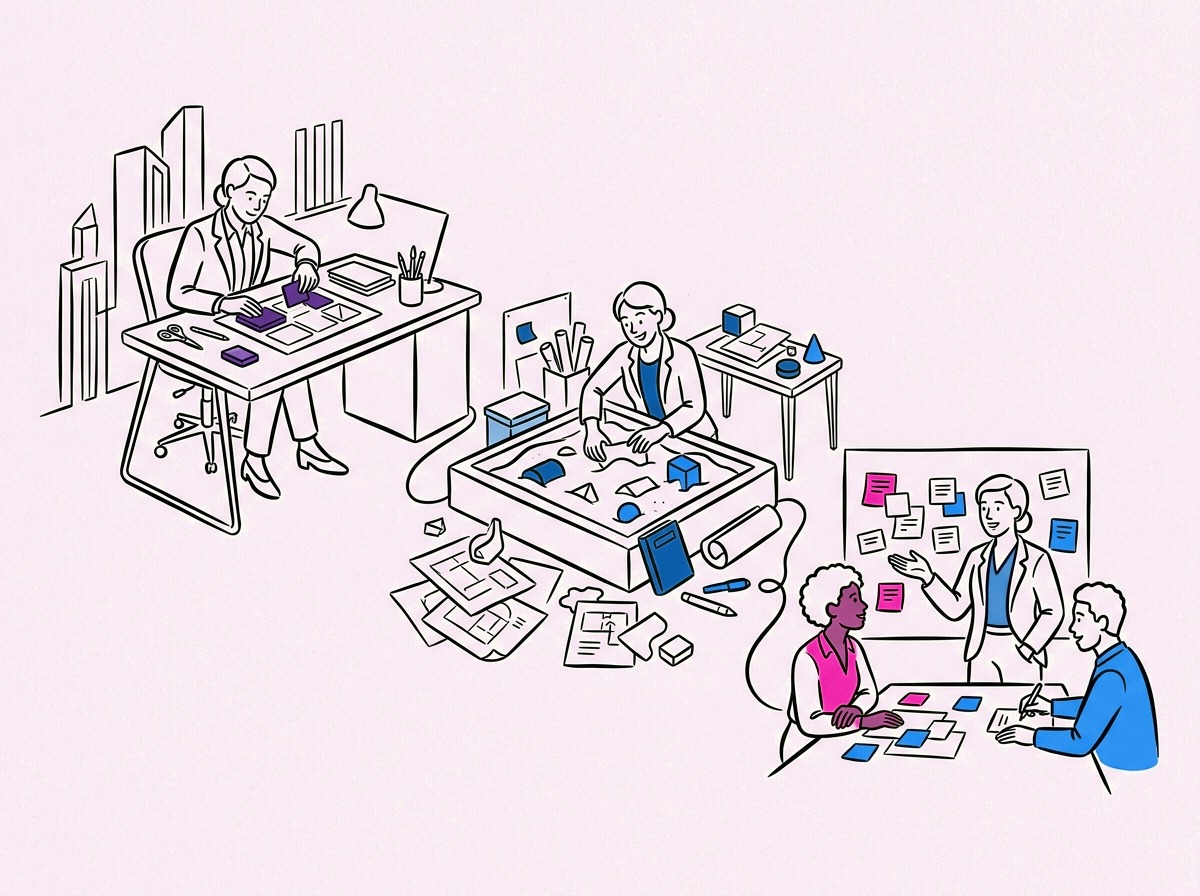
A professional learning through a small project, a safe sandbox, and a circle of peers

Professionals often treat AI as a body of knowledge that can be completed. Take the course. Earn the certificate. Learn the current interface. Return to work. That model fails because the technology changes, the work changes, and expertise only develops through repeated use.

The deeper obstacle is often misdiagnosed. Resistance to AI is rarely just a knowledge gap. It is a threat response. It touches competence, autonomy, status, and belonging. More information does not resolve a threat. Experience does.

Albert Bandura identified four sources that shape self-efficacy, the belief that we can succeed at a task. Three of them point directly to a practical way forward. Complete a real win. Make experimentation emotionally safe. Watch peers succeed and learn beside them.

Practice on small, real projects.

The fastest path to useful capability begins with one small task from your real work, carried from beginning to end. Small is not a concession. It is the design. The first attempt is sized so it can be finished, examined, and used as the foundation for another attempt.

Real matters as much as small. Adults learn differently when the problem belongs to them. Malcolm Knowles built adult learning theory around this distinction. Adults resist abstract instruction imposed without context. They respond to problems connected to immediate goals and responsibilities. A generic exercise teaches a feature. A real project teaches a professional how the feature behaves inside their world.

Bandura explains why finishing matters. Mastery experience is the strongest source of self-efficacy. It is not encouragement and it is not positive thinking. It is evidence gathered by the learner that a difficult action can be completed. One finished project changes the belief carried into the second project.

New pilots do not log their first hours in a jet during a storm. They fly a small, forgiving aircraft on a calm day. The conditions are chosen so the learner can complete the cycle and understand what happened. Nobody mistakes the smaller plane for the limit of the pilot's ambition. It is the correct first environment for building the capability the larger plane demands.

Choose a task with a visible beginning and end. Summarize a public report. Compare three options against criteria you already use. Turn meeting notes into a first draft of a project update. Create questions that expose gaps in a plan. Keep sensitive information out until the method and the rules support it. The task should matter enough to be real and remain small enough to finish.

Starting with an ambitious system feels serious. It often produces the wrong lesson. The project stalls, the professional interprets the stall as evidence of poor aptitude, and the next attempt becomes harder. A series of courses can create the same trap. Knowledge accumulates while the belief required for action does not.

One finished thing beats ten started things. The reason is not discipline. Finishing changes what you believe you can do next.

The first win is small on purpose. It is the only one that has to be.

Treat practice as play, not performance.

Real learning moves in a loop. Try something. Observe what happened. Extract the lesson. Try again. The loop only keeps running when a failed attempt is cheap enough to study.

Performance changes the conditions. When every attempt feels evaluated, a weak result becomes a verdict. The learner protects competence by narrowing the experiment, hiding the failure, or stopping. None of those responses indicate a lack of ability. They indicate that the learning environment was built like an examination.

Play is a deliberate technique for defusing that threat response. It is not permission to be careless with live work. Software engineers test code in a sandbox because errors there are cheap, visible, and reversible. The sandbox is not a lack of seriousness. It is the discipline that makes serious deployment possible.

David Kolb described experiential learning as a cycle that begins with concrete experience, moves through reflection and explanation, and returns to active experimentation. A single pass is activity. Repeated passes become learning. Jack Mezirow added that genuine perspective change requires a safe place to examine assumptions after an experience disrupts them.

AI provides an unusually good sandbox when the stakes are controlled. Ask for three approaches to a problem and inspect where they differ. Change one part of the instruction and observe what moves. Give the same task different context. Deliberately ask for a weak version, then define what would make it better. The goal is not the artifact. The goal is seeing cause and effect.

This practice should be separated from the work being judged by a manager or client. Use public information, old material, or a synthetic example. Save the useful methods. Discard the rest. The professional can be rigorous without making every experiment visible.

Without that separation, AI practice becomes a series of tests. Two poor outputs feel like a conclusion. Anxiety gets misread as aptitude. The person uses AI only where confidence already exists, which is where the tool teaches the least.

You are not bad at this. You have been grading yourself on a first draft.

Make the mistakes cheap, and the learning loop keeps moving.

Learn faster with peers than alone.

Capability transfers through people. Curricula can organize knowledge, but much of the knowledge that makes AI useful never appears in a course. It lives in the choices a practitioner makes while doing the work. What context they include. What they verify. What they ignore. When they stop the tool and take control.

Bandura called one part of this vicarious experience. Watching someone like us succeed raises our belief that we can succeed. The effect is especially important when the barrier is fear. A peer does not only transfer a technique. They transfer permission.

Technology adoption research reaches the same conclusion from another direction. The Unified Theory of Acceptance and Use of Technology names social influence as a central driver of whether people intend to use a technology. Peer influence is not a soft extra. It is part of the mechanism that moves knowledge into behavior.

Medicine has learned this lesson in high-stakes settings. New surgical techniques spread through proctoring. A surgeon who has performed the procedure stands beside one who has not. Journal articles carry the evidence, but observation and guided practice carry the technique. The profession learned that written knowledge alone could not transfer everything the hands and judgment needed to know.

Find one person slightly ahead, not a distant celebrity presenting a polished system. Ask to see one real workflow. Ask what failed before it worked. Ask what they verify every time. Share one of your own attempts and invite them to point to the part you cannot yet see.

A small peer group can make this routine. One person brings a task. One demonstrates a method. Everyone names what transferred to their own work. The meeting does not need a curriculum. It needs real artifacts and enough trust for people to show the weak versions.

Learning alone keeps the professional inside general material written for a broad audience. They never see the tacit part of the work because the tacit part is rarely written down. Low self-efficacy persists because nobody similar has demonstrated the path in view.

You will not read your way into expertise. At some point you will watch someone do the work and realize the capability was available to you too.

The fastest route runs through one person who is slightly ahead of you.

Three connected scenes showing mastery through a completed project, safe experimentation, and learning with peers
Mastery grows through completed work, safe experimentation, and visible peers.
Premise 3

Tools are temporary. Capabilities last indefinitely.

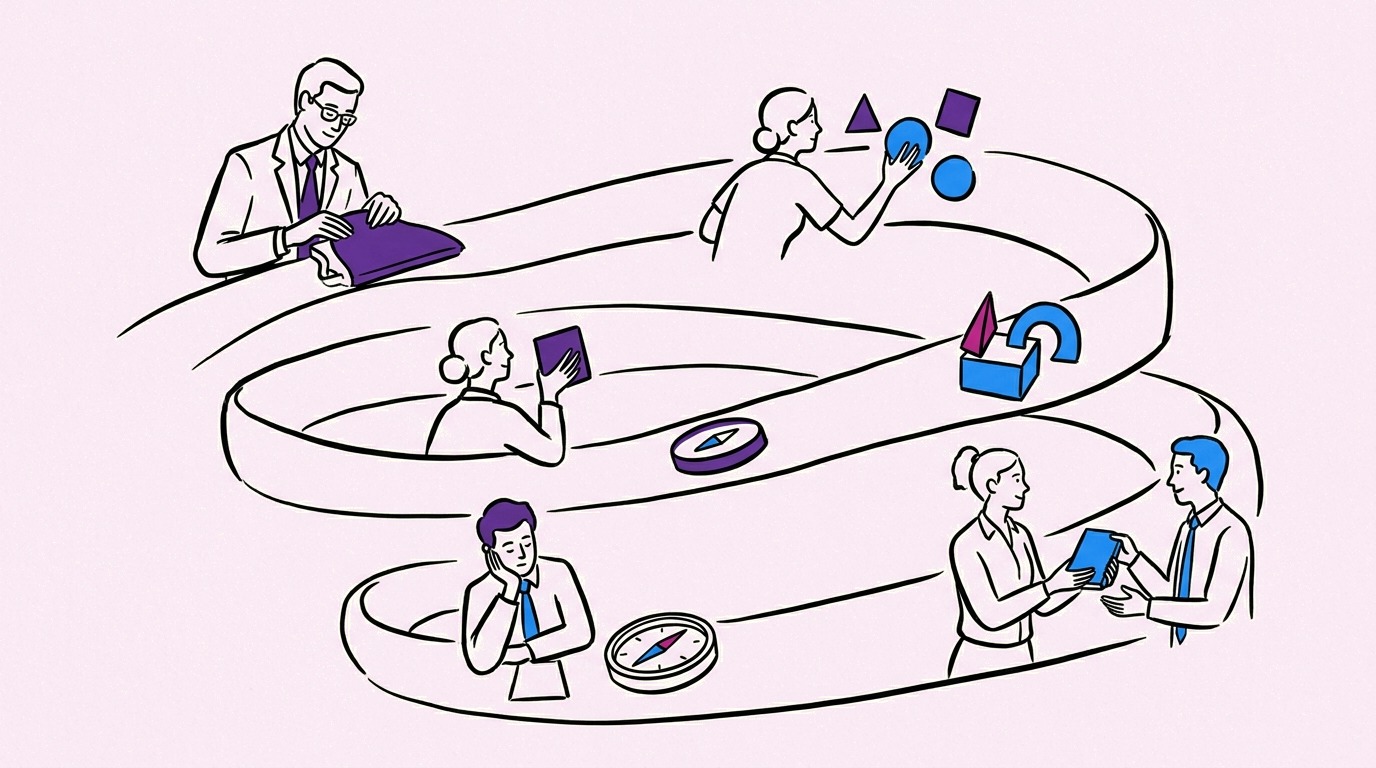
Temporary software windows surrounding a durable structure built from human capabilities

Regular use is not the same as capability. Many professionals use AI as an answer engine. They ask, receive, and move on. That can be useful. It is not fluency, and it does not become durable because it happens every day.

Tool-centered learning forces a professional onto a treadmill. Every release creates another interface to master and another feature list to chase. Capability-centered learning builds something that survives the release cycle. It has structure, depth, and a stronger thinking capacity underneath both.

Build AI skills in stages.

Learning AI is not one skill. Research, communication, analysis, operations, workflow design, and agent direction are different capabilities. Each has its own learning curve. Each also depends on more basic capabilities being reliable.

Bloom's revised taxonomy gives the sequence a useful spine. Remembering supports understanding. Understanding supports application. Application creates material for analysis. Analysis makes evaluation possible. Evaluation supports creation. The levels can move quickly when the learner has strong domain knowledge. They cannot be skipped without moving the missing work downstream.

A professional may try to build an agent before learning to specify a task. The build may appear technical, but the failure began earlier. The agent cannot reliably execute work whose inputs, boundaries, and definition of good were never made explicit. The missing stage returns as review burden, rework, or risk.

Medical education proceeds in stages for the same reason. Anatomy is not the destination, yet a learner cannot skip from interest to residency. Each stage creates the raw material needed by the next. Experienced professionals already possess deep domain knowledge, which lets them compress parts of the path. Compression is an advantage. Skipping is not.

Begin with direct use on bounded tasks. Learn how context changes an output and how criteria improve it. Move into repeatable workflows where outputs become inputs to another step. Then move into delegation, where an agent carries work across time and makes bounded choices. At every level, retain the ability to judge what comes back.

The sequence should not become a reason to move slowly. Urgency and stages are compatible. A person can move through a well-designed progression faster than someone who repeatedly leaps to advanced work, hits an invisible gap, and starts again.

Without stages, breadth of exposure gets mistaken for depth of capability. The professional can discuss many tools and cannot reliably complete one demanding project. When an advanced attempt fails, they blame the level they reached rather than the foundation they skipped.

The stages are compressible. They are not skippable.

Learn principles over tools.

The tool mastered this year may be renamed, rebuilt, or replaced within two. The principles underneath survive. How to define the goal. How to supply context. How to specify what done and good mean. How to verify a result. How to keep control when the work crosses a boundary.

Learning principles does not mean avoiding tools or sampling them casually. It means going deep enough on one capable tool to see the principles beneath the interface. Play describes the mode of practice. Depth describes the commitment. They support each other.

The Anthropic Economic Index found that experienced users of one system achieved higher success and wrote increasingly sophisticated instructions over time. Tenure with the tool became something more than familiarity. It became a richer model of how to structure the interaction. The specific buttons were temporary. The accumulated judgment transferred.

A woodworker who has mastered five hand tools can outperform someone who owns fifty and has used each twice. The tool count was never the variable. Depth teaches pressure, sequence, limits, and recovery. Those are the principles that make the next tool easier to learn.

Choose one capable system and use it across a meaningful range of work. Keep a record of what produced a reliable result and why. Separate principles from product behavior. A principle sounds like "state the decision criteria before asking for options." Product behavior sounds like "click this menu." One belongs in your professional method. The other belongs in temporary notes.

Tool hopping feels like progress because every new interface creates novelty. It resets the learner before depth becomes uncomfortable. The professional accumulates surface familiarity and transferable principle from none of it. Capability depreciates on someone else's product schedule.

Depth also reduces exhaustion. A person who understands the principles does not need to chase every launch. They can ask whether a new tool changes a capability that matters. Most releases do not. When one does, the underlying method provides a place to put it.

Depth is the only investment in this space that no release can depreciate.

Grow your thinking. Not just its application.

Judgment and taste are not fixed traits that a professional either has or lacks. They are downstream of thinking skill. That skill can grow, and AI makes its growth more important because production is no longer the main constraint.

Thinking operates in three plain places. It selects the project worth doing. It defines what done and good mean before the work starts. It evaluates what comes back and decides how to redirect it.

AI can support all three, but it cannot remove the need for them. If the wrong project is selected, speed magnifies the mistake. If quality is undefined, a fluent answer can pass without being useful. If review is weak, a plausible output moves downstream carrying errors that become harder to see.

Research with hundreds of professionals found that individuals using AI could match the output of two-person teams working without it. The machine changed the amount one person could produce. It did not make every person equally effective. Once the tool becomes broadly available, the variance moves to the human side.

Freestyle chess demonstrated the same pattern after computers surpassed human players. The strongest results did not always come from the strongest grandmaster or the strongest machine. Teams with a better process could beat both. The engine was not the advantage. The way the human structured the partnership was.

Bloom's revised taxonomy adds a level that professionals often overlook. Metacognitive knowledge is awareness of our own thinking. It notices how a decision was framed, where confidence came from, and what standard was used. A professional grows thinking by making that process visible, inspecting it, and changing it on purpose.

Keep a decision record for important AI-assisted work. Write the project chosen, the standard for good, the output accepted or rejected, and the reason. Over time the record shows recurring weaknesses in specification and review. It turns experience into a curriculum built from your own work.

Without that practice, tool fluency gets mistaken for capability. Output rises while judgment stays fixed. The professional becomes better at applying a thinking capacity they never strengthen, and that capacity becomes the ceiling on everything built above it.

The tool was never the advantage. Your thinking was.

Premise 4

Using AI is not adding it to work. It is integrating it into work.

A four-stage workflow moving from assistance to redesign, agents, and safeguards

The manifesto turns here. The first three premises establish the mandate, the method, and the capabilities. This premise names what to build.

The sequence has four stages. Add AI to work you already do. Redesign the work around AI. Direct agents that carry the work. Build safeguards at the same speed as access. These are not four options. Each stage creates the conditions for the next.

Add AI to the workflow you already have.

Most daily users still work in answer mode. They ask a question, receive a response, copy part of it into the real work, and move on. That is AI beside the work. The first step toward integration is to place it inside a workflow the professional can describe.

Write down the actual steps of one recurring process. Begin with the trigger. End with the person or system that receives the result. Include the unofficial checks, the handoffs, the waiting, and the corrections that everyone remembers but nobody documented. Then decide where AI can research, draft, compare, classify, or challenge.

Process mapping before automation has a long history in manufacturing. Firms that automated an undocumented process often automated their own dysfunction and made it run faster. The map was never the boring preliminary task. It was the point where hidden work became visible.

A large workplace deployment of an AI assistant illustrates the ceiling of adoption without redesign. Use was widespread and people saved time on email. The composition of the work barely changed. The tool improved one task while the surrounding process remained intact. The gain was real and modest.

This stage is supposed to be modest. The workflow is still initiated and directed by a person throughout. The goal is to learn where AI helps, where it creates review burden, and where a step exists only because the old process required it. The map creates the evidence needed for redesign.

Most professionals have never written down a workflow they own. They know how to perform it and cannot yet articulate all of it. That gap matters because a process cannot be redesigned while it remains tacit. AI exposes the gap by asking for the instructions the professional never had to state.

Stopping here creates a readiness illusion. Frequency rises. Confidence rises. The work remains the same. The professional compares usage with colleagues instead of comparing the impact on what reaches the customer, leader, patient, or next team.

You cannot redesign work you have never written down.

Redesign workflows around AI.

Using AI inside an existing process and rebuilding the process around AI are different acts. The test is binary. If the workflow still runs without AI, it was not redesigned around AI.

Factory electrification provides the exact historical parallel. Early plants replaced a steam engine with an electric motor and connected it to the same central drive shaft. Productivity barely moved. Decades later, plants were rebuilt around distributed electric power. Machines could be placed in the order the work required rather than near a shaft. The productivity gain came from redesign, not from the new motor alone.

An AI assistant bolted onto an unchanged process is the electric motor on the old shaft. It may make one step faster. It does not change the architecture. Redesign begins by asking which steps disappear, which can run together, which should move earlier, and where human judgment adds enough value to remain.

The redesigned workflow keeps a human in the loop at specific points rather than everywhere. The first point is specification. A person defines the goal, context, boundaries, and standard before AI begins. The second is review. A person judges what comes back before it moves downstream. Other checkpoints are added where the consequence of error demands them.

This structure is not a compliance ritual. It produces better work. Research on deskilling finds that AI can improve immediate output while the user's underlying capability erodes. The erosion is difficult to detect because the artifact looks better. Other interaction patterns prevent that loss. The difference is design.

Organizations producing stronger returns from AI invest more heavily in restructuring work than average adopters. That is the corporate version of the same lesson. Technology acquisition does not create integration. Work must be reorganized around the new capability.

A redesigned process may not function without AI, but it must still function under human control. The professional can explain why the task exists, what the system is allowed to decide, what evidence supports the result, and when a person must intervene. Dependence on capability is not surrender of accountability.

Without redesign, a professional gets a frustrating outcome. Adoption is real, satisfaction may be real, and the volume or quality of final work barely changes. They conclude the technology was overhyped. The evidence is accurate. It describes the old process, not the limit of the tool.

Would the workflow still run without AI? If yes, you adopted. You did not integrate.

Develop agent creation and coordination skills.

An agent carries work rather than answering a request. Building and directing one is a management skill before it is a technical skill. The essential acts are delegation, specification, review, exception handling, and accountability. Managers already know the shape of this work.

The transition resembles the move from individual contributor to first-time manager. Skill at doing the work earns the opportunity. It does not automatically produce skill at directing the work. The new role asks for clarity about outcomes, boundaries, resources, and quality. Prompting alone cannot carry that responsibility.

Begin with a job, not an impressive demonstration. Define the result the agent owns, what starts the work, what information it can use, what it may decide, and when it must stop. Define where the output goes next. If the result has no downstream use, the agent is producing activity rather than capacity.

That distinction is the honest caveat. Many agent systems create artifacts that a human rewrites, rechecks, or quietly ignores. They appear productive while adding supervision. This is not a reason to avoid agents. It is the reason to build them around work that can genuinely leave a person's queue.

Use one diagnostic. If this agent stopped running tonight and nobody told you, what would go undone tomorrow?

If the answer is nothing, the agent is a demonstration. If a report fails to reach a decision-maker, a record fails to update, a review queue stops moving, or a customer receives no next step, the agent holds real work. The professional can then measure reliability against an outcome rather than against the amount of content produced.

Coordination that once required meetings, reminders, and status collection can move into a system. Control stays with the person who defines exceptions and watches the right indicators. The dashboard does not remove management. It changes management from chasing information to acting on what needs judgment.

Badly built agents create the worst position in the progression. The professional supervises more and produces less. Well-built agents create capacity. A task leaves the queue, quality remains visible, and attention moves to work that requires a human.

Stop asking whether the agent is working. Ask what stops when it does.

Build safeguards as fast as capabilities.

A bad email may cost an apology. A deleted database can cost a company. Exposed financial, clinical, or employee information can do lasting harm. As AI gains access and agents gain authority, risk grows faster than visible capability.

The answer to more capability was never less capability. It was a discipline that made the capability survivable.

In 1935, the prototype that became the B-17 crashed during a demonstration flight. The aircraft was more capable and more complex than what pilots had flown before. The response was not to abandon the aircraft or simplify it until the advantage disappeared. Pilots developed a preflight checklist that made the complexity manageable. The B-17 went on to fly an extraordinary record without a similar accident.

Safeguards should rise with the level of access. An assistant working from public information needs verification and clear quality criteria. A workflow touching internal data needs approved systems, limited permissions, and traceability. An agent that can change records, send messages, or trigger another system needs stop conditions, monitoring, and a person who owns the outcome.

An agent can hold the work. It cannot hold the blame. Every delegation increases the accountability carried by the person who authorized it. That accountability should shape the design before access is granted, not after the first incident reveals the blast radius.

Build controls at the moment capability expands. Give the narrowest access needed. Separate drafting from sending. Require approval for irreversible actions. Preserve a record of inputs, decisions, and outputs. Test failure conditions with synthetic data. Decide who receives an alert and what they can do when one appears.

This is governance as professional discipline, not governance as paperwork. In regulated work, ambiguity is not a creative feature. The standard is knowing where information came from, what changed, who reviewed it, and what evidence supports the decision. Less regulated work benefits from the same clarity before the consequences force it.

Without safeguards, access expands through a series of reasonable small steps until the total exposure is something nobody would have approved as one decision. The first serious incident becomes the story leaders use to restrict AI for everyone. Capability stalls because trust was assigned before it was earned.

Build the safeguard at the same moment you grant the access.
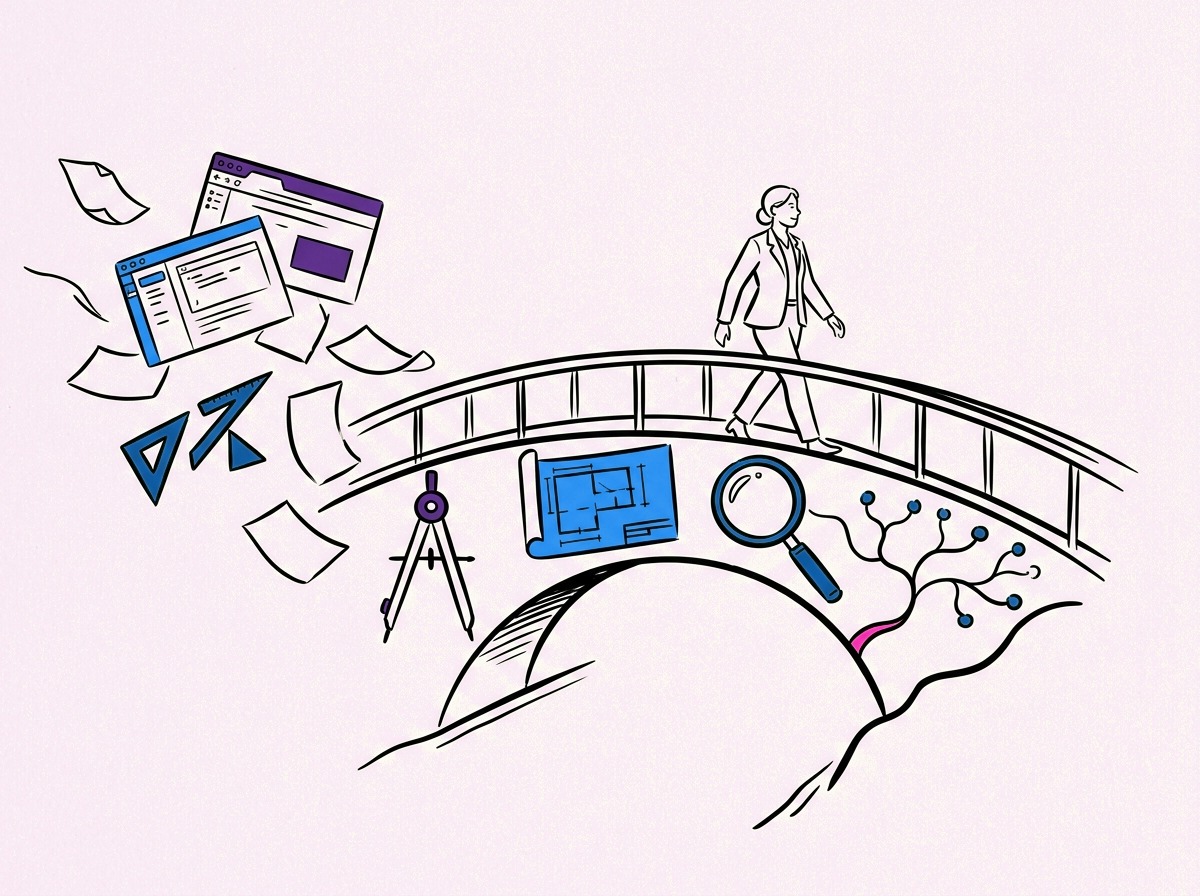
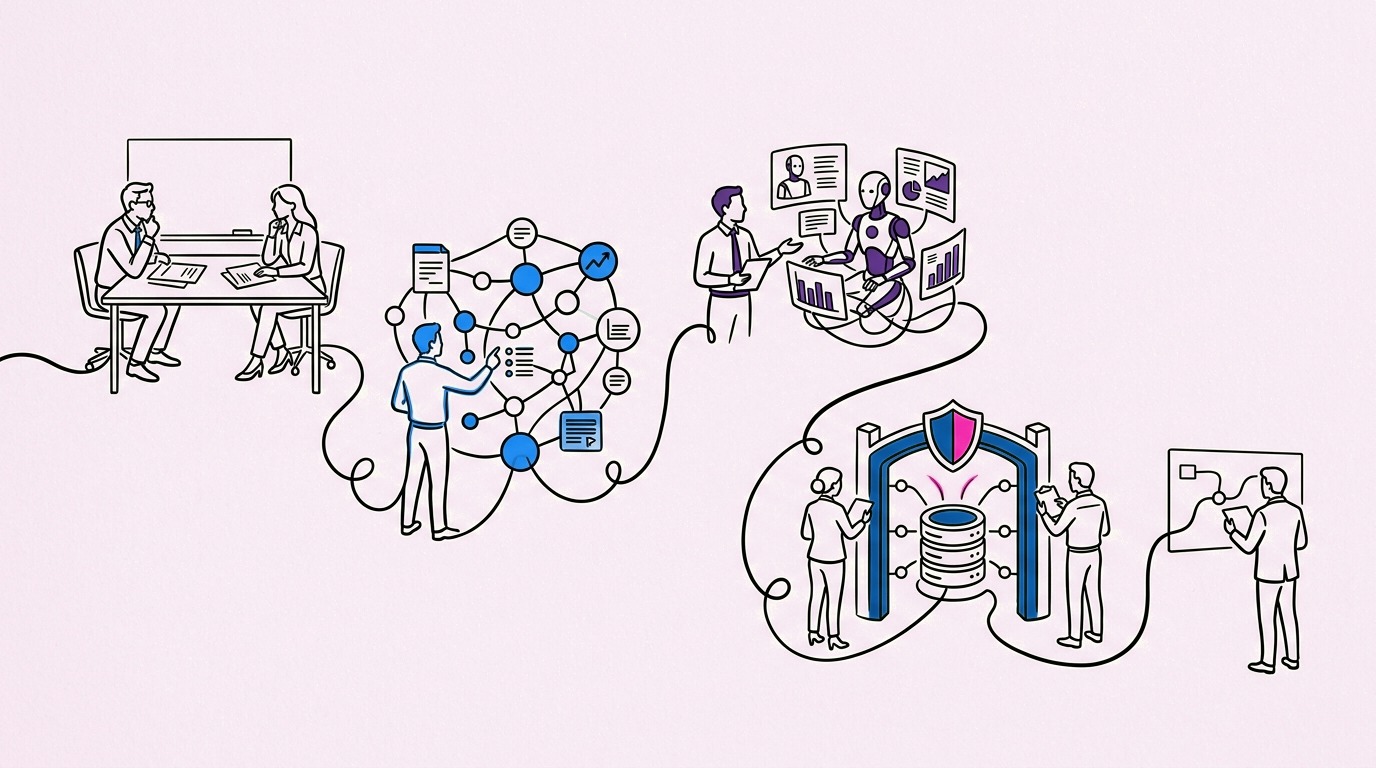
A continuous line moving through mapping, workflow redesign, agent coordination, and a protective checkpoint
Integration moves from mapping to redesign, delegation, and governance.

The closing challenge

The professional you can become has a name.

The AI-Powered Professional.

An AI-Powered Professional is an expert in their domain and an expert at using and managing AI for the work they do in that domain. The expertise is specific. An attorney does not need to build manufacturing agents. A program manager does not need to master clinical analysis. Each needs to understand how AI changes the work they already own.

This identity was earned across thirteen planks before it was named. It is not a label placed on ordinary tool use. It describes a professional who can give AI a question, then a task, then a workflow, and then responsibility inside a governed system.

They redesign work with AI at the core while maintaining human control and judgment. They choose what matters, define what good means, direct the work, and answer for the outcome. They become the C-level executive of their own department even when the title does not change.

That is what the unannounced promotion was preparing you to become.

We do not need universal mastery. We need domain experts who can direct new capability without surrendering the standards their professions require. We need people who can move faster without confusing speed with value. We need people who can build more without losing sight of what deserves to be built.

The first move requires no permission, new budget, or title change.

Choose one workflow you own. Write down every step from the moment it begins to the moment another person or system receives the result. Mark where AI can research, draft, compare, classify, or challenge. Mark where human judgment must remain. Finish the map this week.

That map is not the destination. It is the first visible act of a different professional identity.

Start now.
Or keep waiting.

Bruce Fleck, PhD · The Business Professional's AI Manifesto

Source notes

The research behind the argument

The manifesto keeps citations out of the reading flow. These notes identify the principal research, theories, and historical cases used in the text.

  1. BCG, AI at Work 2026. Survey of more than 11,000 workers across 14 markets.
  2. Microsoft, Work Trend Index 2024. Workplace use and bring-your-own-AI adoption.
  3. Section, AI Proficiency Report. Access and training gaps inside organizations deploying AI and agents.
  4. Stanford research on employment patterns among younger workers in AI-exposed occupations.
  5. Harvard research using roughly 200 million job postings to examine changes in junior and senior hiring.
  6. Albert Bandura. Self-efficacy theory and social learning theory.
  7. Malcolm Knowles. Andragogy and problem-centered adult learning.
  8. David Kolb. Experiential learning and the cycle of experience, reflection, conceptualization, and experimentation.
  9. Jack Mezirow. Transformative learning and critical reflection following a disorienting experience.
  10. Venkatesh, Morris, Davis, and Davis, 2003. The Unified Theory of Acceptance and Use of Technology.
  11. Anderson and Krathwohl. Bloom's revised taxonomy of cognitive processes and knowledge types.
  12. Anthropic Economic Index. Findings on tool tenure, success, and increasing sophistication of use.
  13. Dell'Acqua and collaborators, NBER Working Paper 33641, The Cybernetic Teammate. Study of 776 professionals working alone, with AI, and in teams.
  14. Research on AI use, metacognitive laziness, and skill transfer, including Fan and collaborators and Shen and Tamkin.
  15. Ronald Coase. The nature of the firm and the economics of coordination.
  16. Historical cases used as analogies include spreadsheet adoption, radiology after early automation predictions, factory electrification, surgical proctoring, freestyle chess, and the B-17 checklist.